
Luxury Resorts & Hospitality: Creating Memorable Guest Experiences Faster (2026)
Updated: Aug 26
Luxury Resorts & Hospitality: Creating Memorable Guest Experiences Faster (2026)

Of every application covered in this Stage, hospitality development has arguably embraced prefab construction fastest and most enthusiastically across India, and this article explains exactly why - not as a generic endorsement, but through the specific operational and financial mechanics that make prefab construction particularly well suited to how hospitality businesses actually work.
In This Guide You'll Learn
✔ Why hospitality development has embraced prefab faster than other sectors
✔ How scalability advantages compound for multi-cottage properties
✔ The revenue timing mechanics that make speed genuinely valuable
✔ Design considerations specific to guest-facing hospitality spaces
✔ How glamping and eco-lodge development uses prefab specifically
✔ Quality consistency's outsized importance for guest experience
✔ How to evaluate a manufacturer's hospitality-specific experience
Planning a complete resort build? Start with our complete 2026 guide to prefab resort construction in India — cottage designs, per-key costs, ROI models and delivered projects.
Introduction: Why Hospitality and Prefab Fit So Well Together
Hospitality development shares a specific characteristic that makes prefab construction's core advantages particularly valuable: revenue only begins once a property opens, meaning every month of construction represents genuine foregone income rather than simply elapsed time, exactly the revenue timing consideration this pillar's cost comparison article introduced. Combined with the multi-unit scalability advantage this pillar's Stage 4 comparison explored, and the guest-facing quality consistency importance this article will address directly, hospitality development represents perhaps the clearest, most quantifiable case for prefab construction's core value proposition across every application this Stage covers.
1. The Revenue Timing Advantage, Quantified
As this pillar's cost comparison article illustrated with a worked example, every month a hospitality property remains under construction rather than open represents genuine foregone room revenue, often a considerably larger figure than any construction cost difference between methods. A boutique resort opening for even one additional peak season, made possible by prefab's compressed timeline relative to conventional construction's eight-month-plus schedule, frequently generates revenue that dwarfs any headline construction cost comparison many times over - the single most compelling, quantifiable reason hospitality developers increasingly default to prefab construction specifically.
2. Scalability for Multi-Cottage Developments
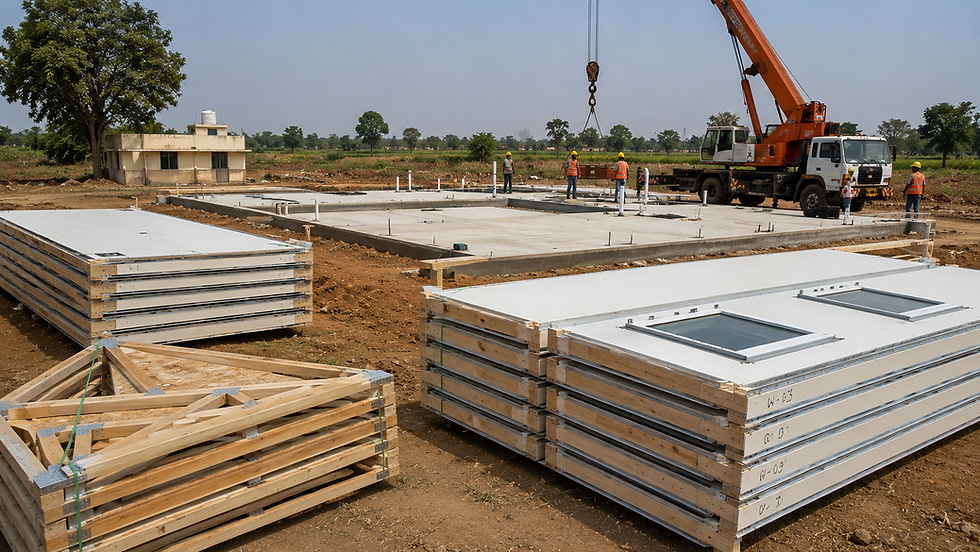
As this pillar's Stage 4 comparison article explained, prefab manufacturing scales considerably more efficiently for multi-unit projects than conventional construction, since a factory can produce multiple cottages' worth of components in parallel while installation crews erect completed cottages sequentially, exactly the phased approach this pillar's transportation and site installation articles illustrated with real resort examples from locations including Ooty and Alibaug. This scalability advantage compounds with every additional cottage a development requires - a twelve-cottage resort benefits proportionally more from prefab's parallel manufacturing than a single home ever could.
3. Quality Consistency's Outsized Guest-Facing Importance
This pillar's cost comparison article touched on quality consistency's reputational importance for hospitality specifically, worth expanding here directly: guest reviews and repeat bookings depend on a consistent experience across every unit a property offers, and factory-manufactured, jig-verified quality consistency, covered throughout this pillar's earlier stages, delivers exactly this uniformity across every guest cottage in a way conventional construction's individual, worker-dependent quality can struggle to match consistently across a dozen or more separately built units.
💡 Loom Crafts Expert Insight — A resort operator once told us that guest reviews rarely praise a property for having one exceptional cottage among several merely adequate ones - guests expect consistency, and one underperforming unit disproportionately affects overall property reputation regardless of how excellent the other units are. This is precisely why we emphasise our jig-verified manufacturing consistency so specifically with hospitality clients; it's not an abstract engineering benefit, it's a direct driver of the guest experience consistency their entire business model depends on.
4. Glamping and Eco-Lodge Development Specifically
Glamping and eco-tourism accommodation represents a fast-growing hospitality segment particularly well suited to prefab construction, given this segment's typical preference for compact, nature-integrated cottage units - Studio and Single Room configurations this pillar's introductory article referenced - deployed across a natural landscape with minimal site disruption, exactly the reduced construction footprint this pillar's sustainability Stage described as a genuine environmental advantage particularly relevant to eco-tourism's own environmental positioning. Loom Crafts' related brand, Glamp Wilderness in Bangalore, illustrates this application directly, alongside broader industry growth in this segment across India's forest, hill and rural tourism destinations.
5. Design Considerations for Guest-Facing Spaces
Hospitality design carries specific considerations beyond residential construction's priorities: acoustic performance between adjacent guest units, covered in this pillar's wall and floor systems article, matters considerably more in a hospitality context where unrelated guests occupy neighbouring rooms than in a family home where occupants are related and generally more tolerant of household sound. Durability under higher turnover use, easy-to-maintain finish specification supporting frequent housekeeping and turnover cleaning, and universal design considerations for accessibility across a diverse guest base all deserve specific attention during hospitality-focused design development.
6. Common Area and Amenity Building Considerations
Beyond individual guest cottages, hospitality developments typically require common area structures - reception buildings, dining facilities, spa or wellness spaces - which may benefit from the hybrid construction approach this pillar's systems article described, combining prefab guest cottages with a conventionally built or hybrid common area structure where larger open-plan spans or more elaborate architectural features suit conventional construction's greater on-site flexibility, exactly the honest, project-specific system matching this pillar has consistently recommended rather than forcing a single construction method across every building on a property.
7. Planning Considerations Specific to Hospitality Developers
Hospitality developers should factor several specific considerations into their planning process beyond what this pillar's general design-to-delivery article covered: seasonal opening timing, working backward from a target opening date - often tied to a specific tourist season - to establish the design-freeze deadline that timeline requires; phased development options, where an initial cottage phase opens and generates revenue while later phases remain in development, covered in this pillar's design-to-delivery article's multi-cottage discussion; and financing structures specific to hospitality development, often involving different lender relationships and disbursement patterns than individual residential financing.
8. Evaluating a Manufacturer's Hospitality Experience Specifically
Given hospitality's specific requirements, evaluating a manufacturer's genuine hospitality-sector experience, distinct from residential experience alone, matters considerably. Ask specifically about completed resort or hospitality projects, ideally in terrain or climate similar to your own site, request to speak with hospitality operators who have worked with the manufacturer previously as this pillar's buyer concerns article recommended, and confirm the manufacturer's experience with the specific phased delivery and multi-unit scheduling logistics this article and this pillar's transportation and installation articles described as genuinely different from single-home project management.
Wellness Retreats and Spa-Focused Hospitality
A further hospitality segment worth specific attention involves wellness retreats and spa-focused properties, where thermal comfort, acoustic tranquility and a genuine sense of natural integration matter even more intensely than typical hospitality accommodation, given that guest experience quality is often the property's entire value proposition rather than one factor among several. For this segment, the building envelope quality this pillar's dedicated Stage 3 articles described in technical depth becomes particularly consequential - genuinely effective insulation and thermal-break detailing directly support the calm, consistent indoor environment wellness guests specifically seek, while the acoustic performance this article's earlier section addressed matters intensely for treatment rooms and quiet relaxation spaces.
💡 Loom Crafts Expert Insight — A wellness resort client in Wayanad specifically requested enhanced acoustic insulation between treatment rooms beyond our standard specification, recognising that guest experience at a spa-focused property depends heavily on genuine quiet during treatments - a detail easy to overlook in a standard cottage brief but genuinely central to this specific property's entire value proposition. Understanding your property's specific guest experience priorities, beyond generic hospitality requirements, helps us specify considerably more precisely than a one-size-fits-all resort template would.
Farm-Stay and Agritourism Properties
India's growing farm-stay and agritourism segment represents a further hospitality application worth noting specifically, where properties combine working agricultural land with guest accommodation, often on sites with genuinely limited existing infrastructure and access this pillar's limitations and transportation articles addressed as real planning considerations. Prefab's reduced site disruption and compressed construction timeline, covered throughout this pillar, particularly benefit this segment, since farm operations often need to continue with minimal disruption during construction, a consideration conventional construction's extended, more disruptive site presence handles considerably less gracefully than prefab's compressed installation period.
How Financing Differs for Hospitality Developers
Hospitality development financing typically differs meaningfully from individual residential financing, often involving project finance structures, hospitality-specific lenders, or investor partnerships rather than a standard home loan, and this pillar's financing considerations, covered generally in the design-to-delivery article, apply with additional complexity for a commercial hospitality venture. Lenders financing hospitality development frequently require more detailed project documentation - projected occupancy and revenue modelling, structural warranties and certifications supporting asset valuation, and clear construction timelines supporting their own return-on-investment calculations - making the documented, warranty-backed construction quality this pillar has emphasised throughout particularly valuable for supporting a hospitality developer's own financing conversations.
Coordinating your prefab manufacturer's project milestones with your specific hospitality financing structure's requirements, similar to the individual buyer coordination this pillar's design-to-delivery article described but scaled to commercial complexity, is worth raising explicitly and early with both your manufacturer and your financing partners, ensuring construction progress documentation aligns with whatever disbursement or reporting requirements your specific financing arrangement demands.
9. The Revenue Mathematics of Opening Early
Hospitality is the one building type where construction speed converts to income with algebraic directness, so it deserves the explicit arithmetic. A boutique property of, say, ten cottages carries a nightly earning capacity that begins the day it opens and is forfeited every day it doesn't. Compress the build calendar by even two or three seasons' worth of months — entirely typical when factory manufacturing runs parallel to site works — and the recovered operating window often rivals a meaningful fraction of the construction cost itself. The compounding effects matter as much as the headline: an earlier opening catches the next peak season instead of missing it, begins accumulating reviews and repeat guests sooner, and starts servicing debt from revenue rather than patience. Phased development sharpens the advantage further — open the first cluster of cottages while the next manufactures, and the property funds its own expansion from trading income, a financing structure conventional construction timelines simply cannot offer.
10. Designing the Guest Experience Into the Buildings
Resort buildings succeed by what guests feel and photograph, and several design moves consistently deliver:
Frame the view, then the room — orient each cottage to its best sightline with generous glazing and a private deck; in hillside and waterfront properties, staggered placement gives every unit its own horizon.
Privacy as luxury — insulated wall assemblies deliver the acoustic separation that defines premium stays; guests forgive many things before they forgive hearing neighbours.
Weathered-in comfort — hill properties trade on cosy warmth, coastal ones on cool interiors against humid heat; the engineered envelope delivers both, quietly cutting the property's largest utility line while it does.
Local skin, engineered bones — cladding palettes, roof forms and interior textures tuned to the destination's character let identical engineering read as Coorg coffee-estate, Rishikesh riverside or Rajasthan desert camp.
Service without sightlines — plan utility routing, housekeeping access and back-of-house movement at master-plan stage so operations stay invisible to the guest experience.
Operators who pair this design thinking with manufacturing's repeatability get the rarest hospitality asset: a property that scales without diluting — every new cottage as good as the first, delivered on a calendar the business plan can trust.
Frequently Asked Questions (FAQs)
1. Why do hospitality developers increasingly choose prefab construction?
Primarily for revenue timing advantages - every month saved on construction represents earlier room revenue generation - combined with scalability and quality consistency benefits across multiple guest units.
2. Can prefab construction handle a twelve or more cottage resort development?
Yes - prefab manufacturing scales efficiently for multi-unit projects, with factory production running in parallel across multiple cottages while installation crews erect completed units sequentially.
3. Is prefab construction suitable for glamping and eco-lodge developments?
Yes, particularly well suited given the segment's preference for compact, nature-integrated units with minimal site disruption during construction.
4. Should common area buildings like reception and dining be prefab too?
Not necessarily - hybrid construction combining prefab guest cottages with conventionally built common areas often suits larger, more architecturally elaborate common spaces better.
5. How does acoustic performance matter differently for hospitality versus residential prefab?
Acoustic separation between guest units matters considerably more in hospitality settings with unrelated occupants than in a family home, requiring specific attention during design.
6. Can hospitality development be phased with prefab construction?
Yes - an initial cottage phase can open and generate revenue while later phases remain in development, a common approach for larger resort developments.
7. What should I ask a manufacturer about their hospitality experience specifically?
Ask for completed resort projects in similar terrain, references from hospitality operators, and their experience managing phased, multi-unit delivery and installation scheduling.
8. Does prefab construction affect a resort's guest review consistency?
Positively - factory-manufactured, jig-verified quality consistency helps ensure every guest unit delivers a similar experience, avoiding the reputational risk of inconsistent quality across units.
Conclusion
Hospitality development represents perhaps the clearest, most quantifiable application of prefab construction's core advantages - revenue timing, scalability and quality consistency all compound in ways that directly affect a hospitality business's bottom line, not merely construction convenience. Whether developing a boutique resort, a glamping retreat, or a premium villa property, understanding these specific mechanics, and evaluating a manufacturer's genuine hospitality-sector experience directly, positions any developer to make a considerably more informed construction method decision than a generic residential comparison alone would provide.
📌 Add Loom Crafts Prefab as a Preferred Source on Google to see more of our guides in Top Stories and AI search.
Continue Reading
Continue Your Stage 6 Journey
Popular Answers and Deep Dives
Ready to Build Your Resort or Hospitality Project?
Loom Crafts Prefab has delivered resort and hospitality projects across locations including Rishikesh, Coorg, Wayanad and Guwahati, with a Resort Development Services offering built specifically for developers. We support hospitality builders with:
Phased, multi-cottage scheduling and delivery coordination
Full Resort Development Services from concept through opening
Revenue-timing analysis comparing construction methods for your project
Consistent, jig-verified quality across every guest unit
A 20-year structural and rain-leakage warranty across your entire development
Call Us: +91 98711 22239 | Email: rahul@loomcrafts.com
📅 Prefer a live walkthrough? Book a free online demo at a time that suits you — our team will take you through designs, 2026 pricing and the complete build process on a video call: Book Your Online Demo
Important Disclaimer
This article is provided for general educational purposes only. Figures, timelines and practices described are indicative, vary by project, location and market conditions, and change without notice. This content does not constitute financial or engineering advice. Always obtain a project-specific quotation and consult qualified professionals before making development decisions.


Comments