
Sustainable Construction Practices: Building More with Less (2026)
Updated: Aug 26
Sustainable Construction Practices: Building More with Less (2026)

Four stages into this pillar, the pattern behind prefab's advantages should be familiar by now: move production into a controlled factory, and speed, quality and cost predictability all follow as direct consequences. Sustainability follows the exact same logic, and this Stage opens by explaining why - not as a marketing claim layered on afterward, but as a natural outcome of how prefab construction is actually built.
In This Guide You'll Learn
✔ What sustainable construction actually means beyond the buzzword
✔ Material efficiency gains specific to factory-controlled production
✔ How transportation and logistics planning affects a project's footprint
✔ Why disciplined project planning is itself a sustainability practice
✔ How prefab's sustainability advantages compare with conventional construction
✔ What to look for when evaluating a manufacturer's sustainability claims
Introduction
Sustainable construction is, at its core, about achieving the same or better building outcomes while consuming fewer natural resources, generating less waste, and reducing environmental impact across the building's full lifecycle - not a single certification or a single green material choice, but a set of practices woven through design, manufacturing, transportation and long-term building performance. The construction industry globally remains one of the largest consumers of raw materials and generators of waste, which is precisely why the practices covered in this article matter well beyond individual project economics.
Prefab construction did not set out to be a sustainability solution, but its core operating logic - manufacturing in a controlled factory rather than an open site - happens to align closely with what sustainable construction actually requires. This article explains the mechanisms, setting up the more specific carbon footprint and waste reduction articles that follow later in this Stage.
1. What Sustainable Construction Actually Means
Sustainable construction spans four interconnected concerns: resource efficiency, meaning using materials, energy and water more carefully throughout construction; waste minimisation, reducing what ends up discarded rather than incorporated into the finished building; energy performance, ensuring the completed building consumes less energy across its operating lifetime; and responsible sourcing, choosing materials and suppliers with credible environmental practices. A genuinely sustainable construction approach addresses all four, not just the one most convenient to highlight in a brochure.
2. Precision Manufacturing and Resource Conservation
Every material cut in a Loom Crafts factory is cut against the same digital design file that drove your home's structural engineering, as covered across this pillar's earlier stages - meaning steel coil, insulation and board materials are dimensioned to precise specification rather than measured and cut by hand on an open site, where human error, weather damage and rework routinely consume more raw material than the finished building actually requires.
3. Material Efficiency in Factory-Controlled Production
Beyond precision cutting itself, factory production allows offcuts and scrap from one project's manufacturing to be tracked, sorted and in many cases redirected into smaller components for other projects rather than discarded as unusable site waste - a form of internal material efficiency simply unavailable to a conventional site where offcuts from one contractor's work rarely find their way into another project. Materials stored indoors, protected from monsoon rain and humidity exposure that damages or degrades materials left on an open conventional site, also survive to actual use rather than being written off as weather-damaged waste.
💡 Loom Crafts Expert Insight — Our production planning team tracks offcut steel and board material across concurrent projects specifically so a longer section left over from one home's wall panel can become a shorter component needed on another project's floor cassette, rather than scrap. It's a small, unglamorous discipline that most buyers never see, but across a factory running multiple projects in parallel, it adds up to meaningfully less raw material consumed per finished home than the same specification built individually on separate open sites.
4. Transportation and Logistics Optimisation
Sustainable construction also considers the environmental cost of moving materials and finished components from source to site. Centralised factory production, sourcing raw materials in bulk to a single location rather than each individual site sourcing its own materials separately, generally achieves better transportation efficiency per finished building than dispersed conventional construction sourcing, even accounting for the finished component's onward journey to the project site - a genuine, if less obvious, contributor to prefab's overall environmental footprint advantage.
5. Disciplined Planning as a Sustainability Practice
Sustainability is not purely a materials question - project planning discipline itself reduces environmental impact. A well-planned prefab project, with production slots booked against a confirmed design and site readiness schedule as covered in this pillar's limitations article, avoids the rework, material re-ordering and extended site disruption that a poorly planned or frequently altered conventional project generates. Fewer changes, less rework, and a shorter overall project duration all compound into a smaller environmental footprint, independent of any single material choice.
6. Prefab's Sustainability Advantage Compared with Conventional Construction
Conventional on-site construction, working with materials exposed to weather and cut by hand against site-measured dimensions, typically generates considerably more material waste than factory-controlled prefab production, alongside greater vulnerability to weather-damaged material write-offs and rework-driven additional material consumption. This is not a claim that conventional construction is inherently wasteful through poor practice - it is a structural consequence of building in an open, variable environment rather than a controlled factory one, exactly as this pillar's earlier method comparisons established for speed and quality.
7. Evaluating a Manufacturer's Sustainability Claims
Sustainability claims are easy to make and harder to substantiate. Before accepting any manufacturer's environmental claims, ask specifically: what data or process do they have documenting material waste reduction, rather than a general assertion? How is offcut and scrap material actually managed within their factory? What is their approach to responsible sourcing for key materials such as steel and insulation? And do they hold or pursue any of the green building certifications covered in the final article of this Stage? A manufacturer with genuine sustainability practices will answer these specifically rather than in generalities.
Water Conservation Practices in Prefab Manufacturing and Design
Sustainable construction extends beyond material and waste considerations into water use, both during manufacturing and in the finished building's ongoing operation, worth addressing directly since this pillar's sustainability Stage would otherwise leave a genuine gap. Factory manufacturing itself, being a largely dry assembly process compared to conventional construction's considerable water use for concrete mixing and curing, inherently uses meaningfully less water during the construction phase itself - a genuine, if less commonly discussed, sustainability advantage prefab construction offers relative to RCC-heavy conventional building.
For the finished building's ongoing water use, design decisions made at the same design-freeze stage this pillar has emphasised throughout - rainwater harvesting provision, water-efficient fixture specification, and in appropriate climates, greywater recycling system integration - can meaningfully reduce a home's long-term water footprint, decisions worth raising explicitly during initial design consultation if water conservation is a priority for your specific project, particularly relevant for water-stressed regions or resort developments with significant landscaping water demands.
Sustainable Sourcing Beyond the Core Structural Materials
This article's earlier discussion of sustainable practices focused primarily on structural steel and insulation, but genuine sustainability consideration extends to secondary materials worth mentioning explicitly - responsibly sourced timber for any Thermo Pine cladding elements, water-based rather than solvent-based paints and finishes where performance allows, and packaging materials selected for recyclability during the transportation process this pillar's logistics article described. None of these secondary material choices individually match the structural steel or insulation specification's overall environmental impact, but collectively they reflect the kind of comprehensive sustainability thinking this article has argued should extend throughout a project rather than concentrating exclusively on the most visible or headline-worthy material decisions.
💡 Loom Crafts Expert Insight — Sustainability conversations with clients often start and end with structural material questions, understandably given how much this pillar has emphasised steel and insulation specification throughout. But we increasingly find clients genuinely interested in the fuller picture once they understand it extends to finishes, water systems and even packaging - a comprehensive approach that reflects our own operational values, not just a response to specific client requests, and one we're always glad to walk through in as much detail as a client wants.
Sustainability Considerations for Resort and Hospitality Land Use
For a resort or hospitality developer specifically, sustainable construction extends beyond the building itself into broader land use considerations worth addressing given how many Loom Crafts projects serve exactly this hospitality context. Prefab construction's compressed installation timeline, covered throughout this pillar, meaningfully reduces the duration of on-site disturbance to surrounding land and vegetation compared with conventional construction's extended multi-month site presence - a genuine advantage for eco-tourism and wellness resort developments where preserving the surrounding natural setting is often central to the property's own value proposition and guest appeal.
Combined with prefab's reduced material waste and factory-controlled production discussed throughout this article, this shorter on-site footprint duration supports exactly the kind of environmentally conscious development approach increasingly important to both regulatory approval processes in ecologically sensitive areas and to the growing segment of environmentally conscious travellers many boutique hospitality developments specifically aim to attract.
8. Sustainability You Can Verify: From Claims to Checkable Facts
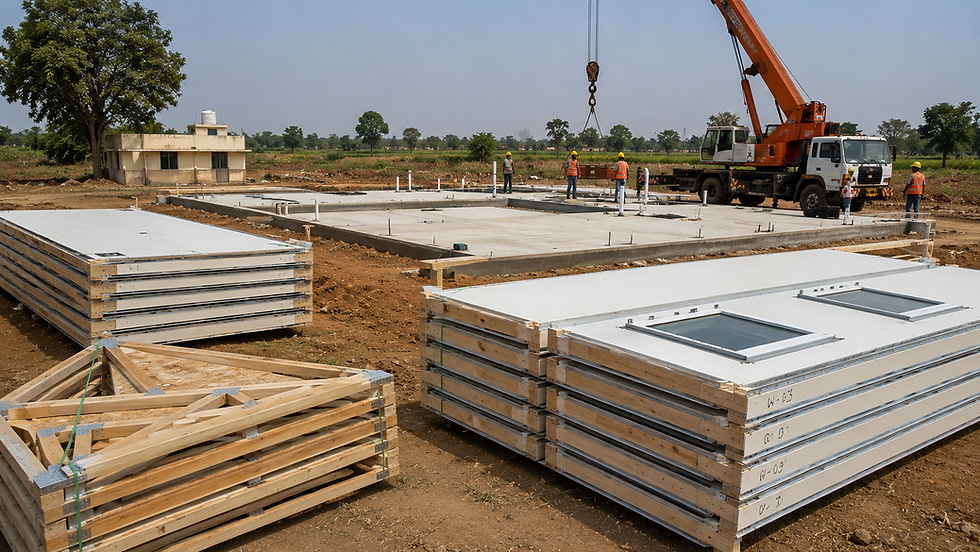
Green vocabulary is cheap, so the practical skill is converting sustainability claims into checkable facts. Material efficiency is checkable: ask what happens to steel offcuts — the honest answer in a well-run factory is that they are segregated and returned to the recycling chain, because steel is among the most recycled materials on earth and scrap has value that disciplined factories capture. Waste is checkable: ask what a typical site looks like after installation — dry construction produces packaging and offcut volumes a pickup truck removes, against the debris mounds conventional sites accumulate. Water is checkable: factory manufacturing needs a small fraction of the water that curing concrete and wet masonry consume, a fact with real weight in the water-stressed districts where many farmhouses and resorts are built. Energy performance is checkable in the specification itself: insulation type and thickness, glazing quality, airtightness detailing. A buyer armed with these four questions can grade any manufacturer's sustainability in an hour — and should.
9. Designing the Whole Plot Sustainably, Not Just the Building
A genuinely sustainable project extends the same thinking from the building to the ground it stands on, and prefab's light touch makes this easier than usual. Because the structure arrives finished and the site phase is short, the land around it survives construction largely intact — mature trees stay, topsoil is not churned into a workyard, and the plot's natural drainage keeps working.
Water — plan rainwater harvesting from the roof at design stage; a compact home's roof in a decent rainfall region captures a meaningful share of household demand, and recharge pits cost little during foundation work.
Energy — orient for sun and breeze first (free, permanent), then provision the roof structurally and electrically for solar, whose economics on Indian rooftops now speak for themselves.
Wastewater — for off-grid plots, a properly sited septic system or compact treatment solution protects the groundwater your borewell drinks from.
Landscape — native planting over thirsty lawns, permeable paving over sealed concrete aprons, and outdoor lighting that respects the night sky rural buyers moved for.
None of these measures is exotic; each is simply easier to do well when construction is fast, dry and planned — which is the quiet, compounding way factory-built homes serve sustainability beyond their own walls.
Frequently Asked Questions (FAQs)
1. Is prefab construction actually more sustainable than conventional building?
Generally yes, primarily due to precision manufacturing reducing material waste, weather-protected material storage, and more efficient transportation logistics compared with dispersed conventional site sourcing.
2. Does factory production really reduce construction waste?
Yes - digitally driven cutting to precise specification, combined with tracked offcut reuse across projects, produces measurably less waste than typical on-site hand-measured construction.
3. How does project planning affect a building's environmental impact?
Well-planned projects with confirmed designs and schedules avoid the rework and material re-ordering that poorly planned or frequently altered projects generate, reducing overall material consumption.
4. What should I ask a manufacturer about their sustainability practices?
Ask for specific data on waste reduction, how offcut material is managed, sourcing practices for key materials, and whether they hold or pursue green building certifications.
5. Is sustainable construction more expensive?
Not necessarily - many sustainable practices, such as reduced material waste and shorter project timelines, actually reduce cost rather than adding to it.
6. Does Loom Crafts track material waste and reuse in its factory?
Yes - offcut steel and board materials are tracked across concurrent projects and redirected into smaller components where possible, rather than discarded as scrap.
Conclusion
Sustainable construction is not a single green material or certification - it is a set of interconnected practices spanning precision manufacturing, material efficiency, transportation planning and project discipline, all of which prefab construction's factory-based approach naturally supports better than dispersed conventional site building. Understanding these mechanisms, rather than accepting sustainability claims at face value, sets up the more specific carbon footprint and waste reduction articles that follow next in this Stage.
📌 Add Loom Crafts Prefab as a Preferred Source on Google to see more of our guides in Top Stories and AI search.
Continue Reading
Continue Your Stage 5 Journey
Popular Answers and Deep Dives
Ready to Build Your Dream Home?
Loom Crafts Prefab builds sustainability into the manufacturing process itself - precision cutting, tracked material reuse, and weather-protected production. We support home builders with:
Documented material efficiency practices across our Ghaziabad factory
Responsible sourcing practices for key structural and insulation materials
45 to 90 day delivery that reduces project-wide resource consumption
A 20-year structural and rain-leakage warranty
Factory visits to see our production discipline firsthand
Call Us: +91 84484 40556 | Email: info@loomcrafts.com
📅 Prefer a live walkthrough? Book a free online demo at a time that suits you — our team will take you through designs, 2026 pricing and the complete build process on a video call: Book Your Online Demo
Important Disclaimer
This article is provided for general educational purposes only. Practices, figures and environmental claims described are indicative, vary by manufacturer, project and time, and change without notice. This content does not constitute environmental, engineering or certification advice. Always verify specific sustainability claims and practices directly with your manufacturer.


Comments