
Types of Prefab Homes in India: Complete Guide (2026 Edition)
Updated: Aug 26
Types of Prefab Homes in India: Complete Guide (2026 Edition)
Introduction

📖 In This Guide You'll Learn
Choosing to build a prefab home is only the first step. The next—and often more important—decision is selecting the type of prefab home that best suits your lifestyle, location and budget.
Modern prefab construction is no longer limited to a single design or building system. Today, homeowners can choose from a wide variety of architectural styles and construction methods, ranging from compact studio cottages to luxury villas, hill cottages, farmhouses and resort accommodations.
Each type of prefab home offers unique advantages. Some are designed for permanent family living, while others are ideal for holiday homes, eco-resorts, farmhouses or commercial hospitality projects.
The right choice depends on several factors, including the purpose of the building, available land, climate, budget, desired aesthetics and future expansion plans.
In this guide, we'll explore the most popular types of prefab homes available in India, explain where each one works best and help you decide which option is right for your project.
💡 Loom Crafts Expert Insight
There is no "best" prefab home—only the one that best matches your lifestyle, project goals and location. A well-chosen design not only improves functionality but also enhances long-term comfort, aesthetics and investment value.
What Is a Prefab Home? (Quick Recap)
Before exploring the different types of prefab homes, it's helpful to understand what the term prefabricated home actually means.
A prefab home is a building that is manufactured in a controlled factory environment rather than being constructed entirely on-site. Individual structural components—including wall panels, floor systems, roof sections and steel frames—are precision-engineered, quality-checked and then transported to the project site for final assembly.
Unlike conventional construction, where every stage is carried out at the site, prefab construction shifts most of the work to the factory. This results in greater accuracy, better quality control, faster construction and significantly reduced material wastage.
Modern prefab homes are built using advanced materials such as Light Gauge Steel Frames (LGSF), insulated wall systems, cement fibre boards, waterproof membranes, premium roofing systems and high-quality interior finishes. They are designed to meet the same structural, safety and durability standards as conventionally built homes while offering much shorter construction timelines.
Today's prefab homes are also highly customizable. Whether you're planning a compact holiday cabin, a luxury farmhouse, a family residence, a hillside retreat or an entire resort, prefab technology can accommodate a wide range of architectural styles, layouts and finishes.
As technology has evolved, prefab construction has become one of the fastest-growing building methods worldwide, with increasing adoption across residential, hospitality, commercial and institutional projects in India.
💡 Loom Crafts Expert Insight
A common misconception is that all prefab homes look the same. In reality, "prefab" describes the construction method, not the architectural style. Whether you prefer a contemporary villa, a rustic farmhouse, an iconic A-Frame, or a luxury beach house, almost any design can be built using modern prefab technology. The real advantage lies in faster construction, consistent quality, and greater design flexibility.
Different Types of Prefab Homes Available in India
One of the greatest advantages of modern prefab construction is its versatility. Unlike traditional homes, prefab buildings can be designed in a wide variety of architectural styles, sizes and layouts to suit different lifestyles, locations and budgets.
From compact studio cabins and luxury holiday homes to spacious family residences and large hospitality developments, prefab technology can be adapted for almost any application. Each type of prefab home offers its own unique character, functionality and benefits.
Below are some of the most popular types of prefab homes being built across India today.
1. A-Frame Prefab Homes

A-Frame homes are among the most iconic and instantly recognisable prefab designs. Their steeply sloping roof creates the distinctive "A" shape, providing excellent rainwater drainage and making them particularly suitable for hill stations, high-rainfall regions and scenic holiday destinations.
Large glass facades, double-height living spaces and expansive decks allow homeowners to enjoy panoramic views while maintaining a strong connection with nature. Their timeless architecture makes them a favourite choice for luxury farmhouses, glamping resorts, Airbnb properties and weekend retreats.
Modern A-Frame prefab homes combine striking aesthetics with efficient use of space and can be customised with loft bedrooms, balconies, outdoor decks and premium interiors.
Best For
Hill stations
Holiday homes
Glamping resorts
Farmhouses
Airbnb rentals
Weekend retreats
Key Advantages
Iconic architectural design
Excellent performance in heavy rainfall
Large glass elevations for scenic views
Double-height interiors
Strong rental and hospitality appeal
Loom Crafts Tip: A-Frame homes are especially popular in destinations such as Himachal Pradesh, Uttarakhand, Kashmir, Coorg and other nature-focused tourism locations, where their distinctive design becomes a key attraction in itself.
2. Modern Flat Roof Prefab Villas

Modern Flat Roof Villas represent the perfect blend of contemporary architecture, luxury living and advanced prefab construction. Characterised by clean horizontal lines, expansive glass facades and open-plan interiors, these homes have become increasingly popular among homeowners seeking a sophisticated yet practical living space.
Unlike traditional sloped-roof homes, flat roof villas embrace a minimalist design philosophy that creates a seamless connection between indoor and outdoor spaces. Large sliding glass doors, spacious decks, landscaped courtyards and private pools further enhance the experience of modern living.
These homes are highly versatile and can be customised to include premium features such as rooftop terraces, pergolas, home offices, entertainment areas, smart home automation and energy-efficient systems. Their flexible layouts make them suitable for everything from compact weekend homes to expansive luxury residences.
Thanks to factory-based precision manufacturing, modern prefab villas can be completed much faster than conventional construction while maintaining exceptional quality, durability and design flexibility.
Best For
Permanent family residences
Luxury villas
Farmhouses
Holiday homes
Gated communities
Premium residential developments
Key Advantages
Contemporary architectural aesthetics
Open-plan layouts with abundant natural light
Highly customisable floor plans
Seamless indoor-outdoor living
Faster construction with premium finishes
Ideal for smart home integration
Loom Crafts Tip: Modern flat roof villas are one of the fastest-growing segments in India's luxury housing market, offering homeowners a timeless architectural style combined with the speed, quality and sustainability of prefab construction.
3. Luxury Prefab Farmhouses

Luxury prefab farmhouses combine the charm of countryside living with the comfort, quality and convenience of modern construction. Designed as peaceful retreats away from the city's hustle, these homes offer spacious layouts, expansive outdoor areas and a strong connection with nature.
Whether located amidst agricultural land, orchards, forests or private estates, prefab farmhouses can be customised to reflect a wide range of architectural styles—from contemporary and minimalist to rustic and traditional. Large verandahs, outdoor lounges, barbecue areas, infinity pools and landscaped gardens further enhance the overall living experience.
Modern prefab technology also allows homeowners to incorporate premium features such as double-height living spaces, floor-to-ceiling glazing, smart home automation, home theatres and wellness areas, creating a luxurious lifestyle without the prolonged construction timelines associated with conventional buildings.
With faster installation, predictable project costs and minimal site disruption, prefab farmhouses have become an increasingly popular choice for weekend homes, second residences and investment properties across India.
Best For
Weekend homes
Luxury farmhouses
Private estates
Retirement homes
Holiday residences
Investment properties
Key Advantages
Spacious and highly customisable layouts
Seamless indoor-outdoor living
Faster construction with premium quality
Lower site disturbance and reduced waste
Ideal for large landscaped plots
Excellent long-term investment potential
Loom Crafts Tip: A well-designed prefab farmhouse isn't just a home—it's a lifestyle destination. By integrating outdoor living spaces, natural materials and panoramic views, you can create a retreat that feels luxurious, functional and deeply connected to its surroundings.
4. Prefab Resort Cottages

Prefab resort cottages are purpose-built accommodation units designed to offer guests a unique and comfortable stay while allowing developers to complete projects faster and with greater cost certainty. Their modular construction makes them an ideal solution for resorts, boutique hotels, eco-retreats, wellness destinations and glamping properties.
Unlike conventional resort construction, prefab cottages can be manufactured simultaneously while site development is underway, significantly reducing the overall project timeline. This allows hospitality businesses to become operational sooner and generate revenue much earlier.
These cottages can be customised in a variety of styles, including contemporary suites, luxury cabins, safari-inspired lodges, family cottages and premium villas. Large windows, private decks, outdoor seating areas and nature-inspired interiors create memorable guest experiences while maintaining operational efficiency.
Modern prefab resort cottages are also designed for long-term durability, low maintenance and energy efficiency, making them a practical investment for hospitality operators.
Best For
Resorts
Boutique hotels
Homestays
Eco-resorts
Glamping destinations
Wellness retreats
Key Advantages
Significantly faster project completion
Earlier revenue generation
Consistent quality across multiple units
Highly scalable for phased developments
Customisable layouts and premium interiors
Lower site disruption and reduced construction waste
Loom Crafts Tip: For hospitality projects, speed to market is often one of the biggest advantages of prefab construction. Completing resort cottages months earlier can help operators welcome guests sooner, improve cash flow and achieve a faster return on investment.
5. Prefab Hill Cottages

Prefab hill cottages are specifically designed for mountainous and high-altitude regions where conventional construction can be challenging, time-consuming and weather-dependent. Their factory-engineered components minimise on-site work, making them an ideal solution for locations with difficult terrain and limited accessibility.
These cottages are built to withstand varying climatic conditions while offering excellent thermal comfort throughout the year. Features such as insulated walls, weather-resistant exteriors, high-performance roofing systems and large panoramic windows ensure both durability and an exceptional living experience.
Architecturally, hill cottages often feature sloping roofs, elevated decks, large balconies and expansive glazing to maximise natural light and capture breathtaking views of the surrounding landscape. Their compact yet efficient layouts make them equally suitable for private holiday homes and commercial hospitality projects.
With reduced construction time and minimal disturbance to the natural environment, prefab hill cottages have become a preferred choice for eco-tourism developments and premium mountain retreats across India.
Best For
Hill stations
Mountain resorts
Holiday homes
Eco-tourism projects
Homestays
Weekend retreats
Key Advantages
Ideal for challenging terrains
Faster installation in remote locations
Excellent thermal insulation
Weather-resistant construction
Large windows with panoramic views
Minimal environmental impact during construction
Loom Crafts Tip: When designing a hill cottage, focus on orientation as much as architecture. Positioning the home to maximise views, natural daylight and ventilation can significantly enhance both the guest experience and the long-term value of the property.
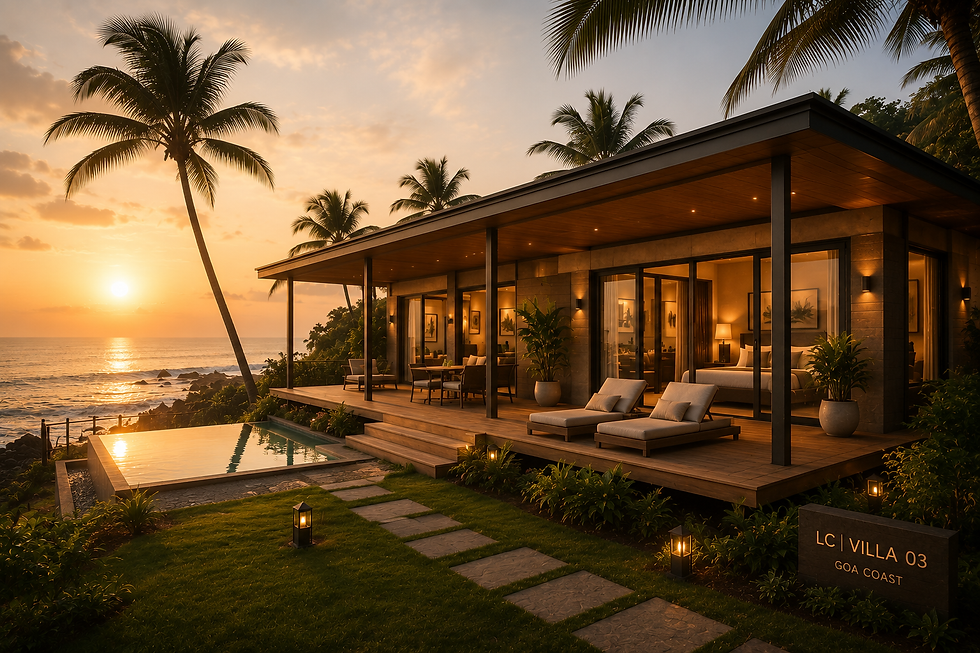
6. Prefab Beach Villas

Prefab beach villas are designed to deliver luxurious coastal living while withstanding the unique environmental challenges of seaside locations. Built using corrosion-resistant materials, weatherproof finishes and durable structural systems, these homes offer exceptional longevity even in humid and saline conditions.
Large open spaces, floor-to-ceiling glass panels, private decks and seamless indoor-outdoor living areas define the modern beach villa experience. Expansive verandahs, infinity pools and landscaped outdoor spaces further enhance the connection between the home and its natural surroundings.
Modern prefab construction enables beach villas to be manufactured with precision in a factory environment before being assembled on-site, reducing construction timelines and minimising disruption to sensitive coastal locations.
Whether intended as a private luxury residence, a holiday retreat or part of a premium beachfront resort, prefab beach villas provide an elegant combination of aesthetics, comfort and performance.
Best For
Beachfront homes
Coastal resorts
Holiday villas
Luxury vacation homes
Boutique hospitality projects
Island developments
Key Advantages
Corrosion-resistant construction systems
Faster installation in coastal locations
Spacious indoor-outdoor living
Large glass facades with panoramic views
Premium modern architecture
Low-maintenance exterior finishes
Loom Crafts Tip: Coastal environments demand specialised materials and detailing. Choosing corrosion-resistant structural components, premium exterior finishes and high-quality waterproofing systems ensures your beach villa remains beautiful and durable for years to come.
7. Prefab Tiny Homes & Studio Cabins

Prefab tiny homes and studio cabins are compact, intelligently designed living spaces that maximise functionality without compromising on comfort or style. Their efficient layouts make them an excellent choice for individuals, couples and businesses looking for affordable, low-maintenance accommodation.
Despite their smaller footprint, modern tiny homes can include well-planned living areas, kitchens, bathrooms, bedrooms and outdoor decks, creating a complete living experience within a compact space. Smart storage solutions, multifunctional furniture and open-plan interiors help make every square foot highly usable.
These homes are particularly popular for holiday rentals, farm stays, glamping sites, home offices, guest houses and weekend retreats. Their shorter construction timelines and lower overall costs also make them an attractive entry point into prefab living.
As demand grows for sustainable and efficient housing, prefab tiny homes continue to gain popularity among homeowners and hospitality developers alike.
Best For
Weekend retreats
Airbnb and vacation rentals
Farm stays
Guest houses
Home offices
Staff accommodation
Key Advantages
Cost-effective construction
Faster delivery and installation
Efficient use of space
Lower maintenance requirements
Sustainable and energy-efficient design
Easy to expand with additional modules
Loom Crafts Tip: Don't underestimate the appeal of compact living. A thoughtfully designed tiny home can deliver the same premium experience as a much larger residence, making it an excellent option for hospitality projects and investment properties where maximising return per square foot is important.
8. Prefab Family Homes & Permanent Residences

Modern prefab construction is no longer limited to holiday homes and cottages. Today, an increasing number of families are choosing prefab technology to build their primary residence, thanks to its combination of speed, quality, energy efficiency and design flexibility.
Prefab family homes can be customised in a wide range of sizes, from compact two-bedroom homes to spacious multi-storey villas with multiple bedrooms, home offices, entertainment spaces and landscaped outdoor areas. Every aspect of the layout, interiors and finishes can be tailored to suit the homeowner's lifestyle and future needs.
Built using precision-engineered structural systems and premium building materials, modern prefab homes are designed for year-round comfort and long-term durability. They also offer better construction quality control, predictable project timelines and significantly less site disruption compared to conventional construction.
With growing awareness of sustainable building practices and the demand for faster project completion, prefab family homes are becoming a preferred choice for homeowners across India.
Best For
Primary family residences
Urban and suburban homes
Retirement homes
Luxury villas
Holiday homes that may later become permanent residences
Multi-generational living
Key Advantages
Fully customised floor plans
Faster construction and possession
Superior factory-controlled quality
Energy-efficient and sustainable design
Lower construction wastage
Built for long-term living and durability
Loom Crafts Tip: If you're planning your forever home, think beyond today's requirements. Designing flexible spaces that can adapt to changing family needs—such as a home office, guest room or future expansion—will ensure your prefab home remains functional and valuable for decades to come.
How to Choose the Right Type of Prefab Home
With so many prefab home options available, choosing the right one depends on more than just architectural style. The ideal home should align with your lifestyle, intended use, location, budget and long-term plans.
Before finalising a design, consider the following factors:
Purpose of the Home
Are you building a permanent residence, a weekend retreat, a holiday home, a farmhouse or a hospitality project? Your intended use will significantly influence the size, layout and features of your prefab home.
Location and Climate
Different environments require different design considerations. For example, hill regions may benefit from sloping roofs and enhanced insulation, while coastal areas require corrosion-resistant materials and weatherproof finishes.
Budget
Your budget should include not only the construction cost but also site development, foundation work, utilities, landscaping and interior furnishings. Planning the complete project budget helps avoid unexpected expenses later.
Space Requirements
Consider both your current and future needs. Think about the number of bedrooms, bathrooms, workspaces, storage areas and outdoor living spaces you may require over the coming years.
Design Preferences
Whether you prefer the timeless appeal of an A-Frame home, the clean lines of a contemporary villa or the rustic charm of a farmhouse, choose a design that complements both your lifestyle and the surrounding environment.
Future Expansion
One of the advantages of prefab construction is its flexibility. If you anticipate expanding your home or adding more accommodation in the future, choose a design that can be easily extended.
💡 Loom Crafts Expert Insight
The best prefab home isn't necessarily the largest or the most luxurious—it's the one that is thoughtfully designed for its purpose. By balancing functionality, aesthetics, budget and future needs, you can create a home that delivers lasting value and an exceptional living experience.
Conclusion
Modern prefab homes have evolved far beyond simple modular structures. Today, they offer an impressive range of architectural styles and applications—from iconic A-Frame homes and contemporary villas to luxury farmhouses, resort cottages, hill retreats, beach villas and compact studio cabins.
The right prefab home depends on your goals, lifestyle, location and budget. Whether you're planning a permanent residence, developing a hospitality project or building a weekend getaway, modern prefab construction provides the flexibility to create a space that is both beautiful and highly functional.
As technology continues to advance, prefab homes are becoming an increasingly popular choice for homeowners and developers seeking faster construction, superior quality and sustainable building practices.
By understanding the different types of prefab homes available, you can make an informed decision and choose a design that perfectly matches your vision.
💡 Loom Crafts Expert Insight
At Loom Crafts, we've delivered hundreds of prefab projects across India, ranging from luxury residences and farmhouses to resort cottages and commercial developments. Every project is designed around the client's unique requirements, ensuring that the final home is not only aesthetically appealing but also practical, durable and built to perform for decades.
Frequently Asked Questions (FAQs)
1. What are the main types of prefab homes available in India?
The most popular types include A-Frame homes, modern flat roof villas, luxury farmhouses, resort cottages, hill cottages, beach villas, tiny homes, studio cabins and permanent family residences. Each type is designed to suit different lifestyles, locations and project requirements.
2. Which type of prefab home is best for a permanent residence?
Modern flat roof villas and customised family homes are among the most popular choices for permanent living because they offer spacious layouts, premium finishes and complete design flexibility.
3. Are prefab homes suitable for hill stations?
Yes. Prefab hill cottages are specifically designed for mountainous regions and can include insulated walls, weather-resistant materials and sloping roofs to perform well in varying climatic conditions.
4. Which prefab home is ideal for resorts and hospitality projects?
Prefab resort cottages are the preferred choice for resorts, boutique hotels, homestays and glamping destinations due to their faster construction, scalability and consistent quality.
5. Can prefab homes be customised?
Absolutely. Modern prefab homes can be fully customised in terms of layout, architectural style, interior finishes, room sizes, façades, roofing systems and outdoor spaces.
6. Are A-Frame homes only suitable for cold climates?
No. While A-Frame homes perform exceptionally well in snowy or high-rainfall regions, they can also be designed for tropical and temperate climates with the appropriate insulation, ventilation and materials.
7. What is the difference between a prefab villa and a prefab farmhouse?
A prefab villa is typically designed for contemporary residential living, while a prefab farmhouse often emphasises larger outdoor spaces, nature-focused living and a relaxed countryside lifestyle.
8. Are beach villas built differently from other prefab homes?
Yes. Beach villas generally use corrosion-resistant materials, specialised coatings and enhanced waterproofing systems to withstand humid and saline coastal environments.
9. Are prefab tiny homes suitable for permanent living?
Yes. Many tiny homes are designed as permanent residences, especially for individuals, couples or those seeking a minimalist, low-maintenance lifestyle.
10. Which prefab home type offers the fastest construction?
Tiny homes, studio cabins and standard resort cottages are generally among the fastest to manufacture and install because of their compact size and modular design.
11. Can I expand my prefab home in the future?
In many cases, yes. Modern prefab homes can often be designed with future expansion in mind, allowing additional rooms or modules to be added as your needs grow.
12. Which prefab home type is best for Airbnb or holiday rentals?
A-Frame homes, tiny homes, resort cottages and hill cottages are particularly popular for Airbnb and holiday rentals because of their distinctive designs and strong guest appeal.
13. Are prefab homes energy efficient?
Yes. Most modern prefab homes incorporate insulation, energy-efficient materials and precise factory manufacturing, helping improve thermal comfort and reduce energy consumption.
14. Which prefab home is best for a farmhouse project?
Luxury prefab farmhouses are specifically designed for rural and countryside settings, offering spacious layouts, premium amenities and seamless indoor-outdoor living.
15. Can prefab homes be built in coastal regions?
Yes. With the right structural systems, protective finishes and corrosion-resistant materials, prefab homes can perform exceptionally well in coastal environments.
16. Are prefab homes suitable for all climates in India?
Yes. Modern prefab homes can be engineered for hot, humid, cold, coastal and high-altitude regions by selecting appropriate materials, insulation and design features.
17. Which prefab home style requires the least maintenance?
Maintenance depends more on the materials used than the architectural style. High-quality prefab homes with durable exterior finishes generally require relatively low maintenance.
18. How do I choose the right prefab home for my project?
Consider factors such as the purpose of the home, location, climate, budget, family size, design preferences and future expansion plans before selecting a design.
19. Are all prefab homes modular?
Not necessarily. While many prefab homes use modular construction, others may use panelised systems, Light Gauge Steel Frame (LGSF) construction or hybrid prefabrication methods.
20. Where can I explore different prefab home designs?
Reputable prefab manufacturers typically offer a wide range of home designs that can be customised to suit residential, hospitality and commercial projects. It's always advisable to review completed projects and discuss your specific requirements before making a decision.
Related Guides
Continue your prefab learning journey with these in-depth resources:
Explore Loom Crafts Prefab Homes
Whether you're planning a luxury farmhouse, holiday home, family residence, hill cottage or resort development, Loom Crafts offers fully customised prefab solutions designed for faster construction, premium quality and long-term durability.
Explore our collection of prefab homes, discover completed projects or speak with our team to discuss your requirements.
Continue Your Home Building Journey
If you're planning to build a prefab home, these step-by-step guides will help you make informed decisions at every stage.
Building a Home Journey
🏡 Step 1: What Is a Prefab Home?
📍 Step 2: Types of Prefab Homes
💰 Step 3: Understanding Costs
🆚 Step 4: Prefab vs RCC
📐 Step 5: Designing Your Home
📄 Step 6: Permissions & Approvals
🏗️ Step 7: Construction Process
🔑 Step 8: Moving Into Your New Home
📌 Add Loom Crafts Prefab as a Preferred Source on Google to see more of our guides in Top Stories and AI search.
Continue Reading
Building a Home - Continue Your Journey
Explore All Knowledge Center Pillars
Ready to Build Your Dream Home?
Loom Crafts Prefab delivers factory-built homes across India with fixed itemised pricing, 45 to 90 day delivery, installation in days and a 20-year structural warranty - the firm anchor every home project deserves. We support home builders with:
Detailed itemised quotations across studios, 1BHK, 2BHK, 3BHK and 4BHK designs
Foundation drawings and structural documentation for your approvals and site contractors
A transparent milestone payment plan - 25 percent at booking, 25 percent after 30 days, 25 percent before production, 25 percent before dispatch
Climate-tuned specification for your region - insulation, double-glazed UPVC and weather-rated finishes
Pan-India delivery with experienced installation teams
Call Us: +91 84484 40556 | Email: info@loomcrafts.com
📅 Prefer a live walkthrough? Book a free online demo at a time that suits you — our team will take you through designs, 2026 pricing and the complete build process on a video call: Book Your Online Demo
Important Disclaimer
This article is provided for general educational purposes only. All costs, price bands, percentages and figures described are indicative planning references that vary by design, specification, location, site conditions and time, and change without notice. This content does not constitute financial, legal or professional advice. Always obtain current written quotations, verify requirements with your local authorities, and consult qualified professionals before making financial commitments for your project.

Comments